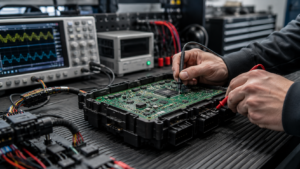
Modern vehicles contain dozens of electronic control units that work together to keep everything operating smoothly. One of the most important of these is the Body Control Module (BCM), a component responsible for managing many of the vehicle’s comfort, convenience, and security systems.
When a BCM develops a fault, the symptoms can be confusing because multiple electrical systems may be affected at the same time. Understanding the warning signs can help vehicle owners identify problems early and avoid unnecessary repair costs.
What Is a Body Control Module?
The Body Control Module acts as a central communication hub for many non-engine-related electrical functions within the vehicle.
Depending on the make and model, the BCM may control:
- Central locking
- Electric windows
- Interior and exterior lighting
- Windscreen wipers
- Alarm systems
- Immobiliser functions
- Keyless entry systems
- Power mirrors
- Dashboard warning indicators
Because so many systems rely on the BCM, even a minor fault can create a wide range of symptoms.
1. Central Locking Stops Working Properly
One of the most common signs of BCM failure is central locking malfunction.
You may notice:
- Doors failing to lock or unlock
- Remote key fobs working intermittently
- Locks activating unexpectedly
- Only certain doors responding
Since the BCM controls communication with the locking system, faults often appear here first.
2. Electrical Components Work Intermittently
If your vehicle’s electrical features seem unpredictable, the BCM could be responsible.
Common complaints include:
- Windows that stop working temporarily
- Mirrors failing to adjust
- Interior lights switching on unexpectedly
- Accessories working one day and not the next
Intermittent faults are often an indication of deteriorating internal circuitry.
3. Dashboard Warning Lights Appear Without Cause
A failing BCM can trigger warning lights even when no mechanical problem exists.
Drivers may see:
- ABS warnings
- Airbag lights
- Security system alerts
- General electrical fault messages
This occurs because the BCM communicates with multiple vehicle modules across the CAN network.
4. Battery Drains Overnight
A BCM that fails to enter sleep mode can continue drawing power when the vehicle is switched off.
Symptoms include:
- Flat batteries after parking
- Frequent jump starts
- Battery replacements that fail to solve the issue
Unexplained battery drain is a common indicator of BCM-related electrical faults.
5. Windscreen Wipers Activate Unexpectedly
Many modern vehicles route wiper controls through the BCM.
A faulty module may cause:
- Wipers running continuously
- Random activation
- Failure to switch off
- Incorrect wipe speeds
These symptoms often point to communication or output circuit failures within the BCM.
6. Lighting Problems
Lighting issues are among the most frequently reported BCM faults.
Examples include:
- Headlights staying on
- Brake lights failing intermittently
- Indicators malfunctioning
- Interior lights behaving erratically
Because the BCM controls various lighting circuits, failures can affect multiple systems simultaneously.
7. Immobiliser and Security System Faults
The BCM plays a vital role in vehicle security.
When faults occur, you may experience:
- Immobiliser warnings
- Key recognition issues
- Alarm system problems
- Vehicle starting difficulties
These faults can sometimes be mistaken for key or transponder issues.
8. Communication Fault Codes
During diagnostics, technicians may discover communication-related fault codes stored across multiple control units.
Examples include:
- Lost communication messages
- CAN bus errors
- Module timeout faults
These issues often indicate that the BCM is no longer communicating correctly with other vehicle systems.
9. Vehicle Functions Stop Working After Water Exposure
Water damage remains one of the leading causes of BCM failure.
Moisture can enter through:
- Blocked drainage channels
- Windscreen leaks
- Door seal failures
- Flood damage
Corrosion on internal circuit boards can create intermittent or permanent electrical failures.
10. Multiple Unrelated Electrical Problems Appear at Once
Perhaps the biggest clue of a BCM issue is when several unrelated systems begin failing simultaneously.
For example:
- Central locking stops working
- Dashboard warnings appear
- Windows become inoperative
- Lighting faults develop
When multiple electrical symptoms appear together, the BCM should always be considered as a possible cause.
Repair or Replace?
Many vehicle owners assume replacement is the only option when a BCM fails. However, professional testing often reveals that the original module can be repaired.
Benefits of BCM repair include:
- Lower costs than replacement
- Faster turnaround times
- Retention of original vehicle coding
- Reduced programming requirements
- Environmentally friendly solution
In many cases, repairing the original module is both the most practical and cost-effective option.
Why Professional BCM Testing Is Important
Because BCM faults can mimic wiring issues, sensor failures, and other electrical problems, accurate diagnosis is essential.
Specialist testing can:
- Confirm whether the BCM is faulty
- Identify internal component failures
- Verify communication across the vehicle network
- Prevent unnecessary parts replacement
Professional diagnostics ensure the correct fault is identified before costly repairs begin.
Final Thoughts
A failing Body Control Module can create a surprising range of electrical issues throughout your vehicle. From central locking and lighting faults to battery drain and immobiliser problems, BCM failures often affect multiple systems at once.
If you’re experiencing unusual electrical behaviour, professional BCM testing can quickly identify the root cause and determine whether repair is possible. Early diagnosis can save both time and money while helping to restore your vehicle’s reliability.